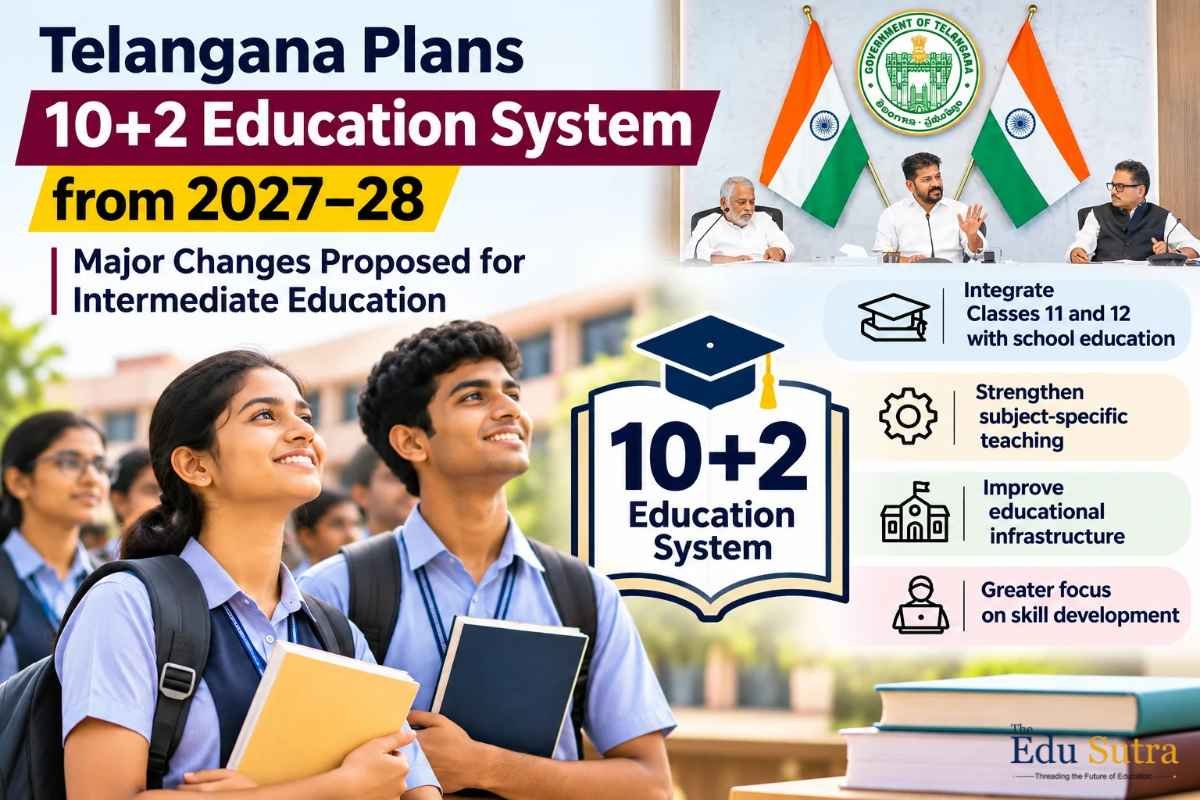
Telangana is preparing for a major transformation of its education system, with Chief Minister A. Revanth Reddy directing officials to introduce the 10+2 education structure from the 2027–28 academic year.
The proposed reform aims to integrate Intermediate education, covering Classes 11 and 12, with the school education system, bringing Telangana closer to the academic structure followed by CBSE and ICSE-affiliated schools.
The Chief Minister issued the directions during a review meeting with senior Education Department officials at the MCRHRD Institute in Hyderabad on Wednesday.
Under the proposed system, students would continue their education from Class 10 into Classes 11 and 12 within a more integrated academic framework. The government also intends to strengthen subject-specific teaching, improve educational infrastructure and introduce greater emphasis on skill development.
What Does This Mean for Students and Parents?
The proposed transition could significantly change how students pursue higher secondary education in Telangana.
Currently, students completing Class 10 generally seek admission to separate junior colleges for their two-year Intermediate education. The proposed framework could alter this arrangement by integrating higher secondary classes more closely with schools.
Also Read:- Telangana Moves on 25% RTE Seats in Private Schools: What Parents Need to Know
However, the government has not yet announced the detailed implementation guidelines, including the future role of junior colleges, the Telangana Board of Intermediate Education, examination procedures and institutional affiliations.
Will the Intermediate Board Be Abolished?
Although the government intends to integrate Intermediate education with the school system, there has been no confirmed announcement formally abolishing the Intermediate Board.
Officials are expected to work out the administrative, academic and infrastructure requirements before the proposed rollout.
The reform could have significant implications for students, parents, teachers, junior college managements and educational institutions across Telangana.
Focus on Skills and Quality Education
The Chief Minister has also emphasised strengthening specialised teaching and skill-oriented education to prepare students for higher education and employment.
The proposed changes reflect the government’s broader objective of improving educational continuity, reducing structural gaps between secondary and higher secondary education, and making learning more relevant to future career opportunities.
With the 2027–28 academic year identified as the proposed implementation period, students and educational institutions will be watching closely for the government’s detailed roadmap.
For now, Telangana’s planned shift to an integrated 10+2 framework marks a significant policy direction, while the final structure and transition arrangements remain to be officially clarified.