
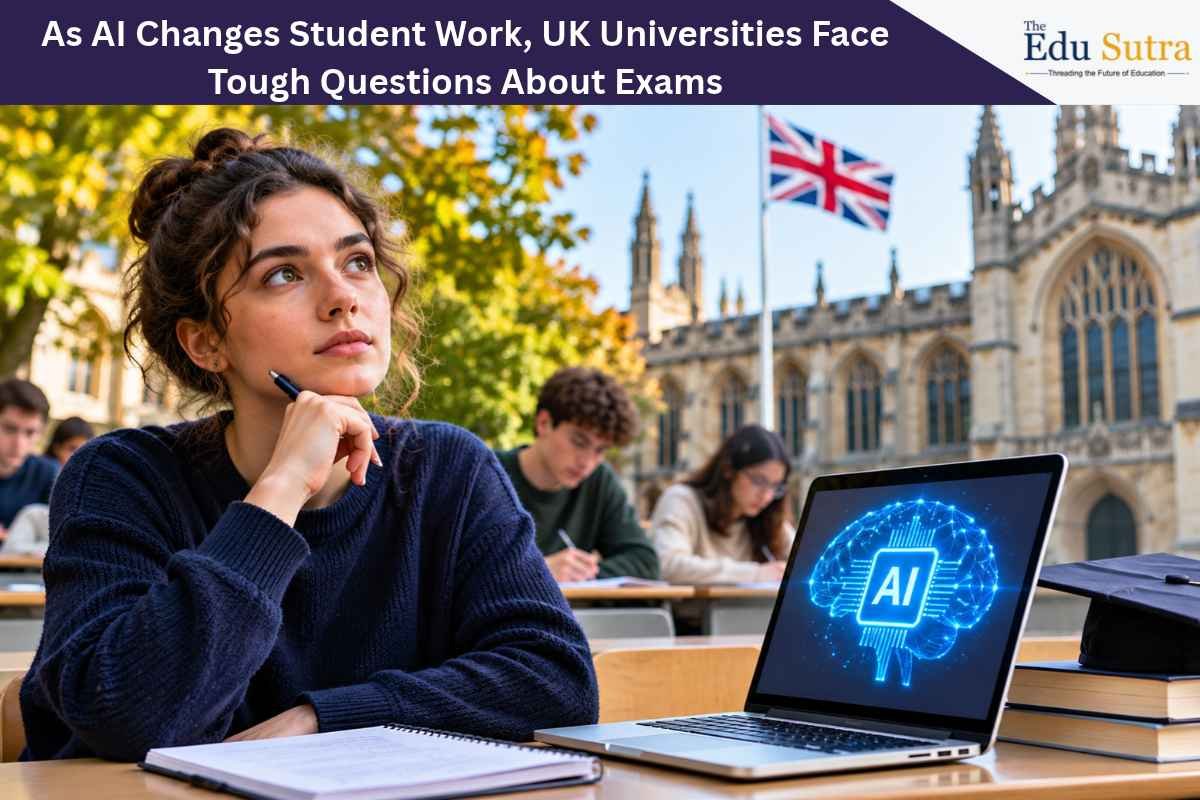
Generative artificial intelligence is forcing universities to reconsider a basic question: how can an assessment reliably show what a student understands and can do independently?
Recent discussion around academic standards in the United Kingdom has renewed attention on the limits of take-home essays and unsupervised written assignments, particularly when widely available AI tools can produce polished text within seconds.
The challenge is not simply to detect AI-written work. Automated detection tools can make mistakes, while students may use AI for legitimate tasks such as brainstorming, accessibility support or language assistance. Institutions therefore need rules that distinguish permitted support from misrepresentation.
One approach being discussed across higher education is to use a broader mix of assessment methods. Supervised examinations, oral questioning, presentations, practical demonstrations and staged projects can help teachers see how students reason, explain decisions and apply knowledge.
Also Read:- AI to Transform Teaching and Learning, Faculty Must Become Facilitators: Pankaj Mittal
Yet no single format offers a complete answer. Traditional timed exams can disadvantage some learners and may not reflect workplace skills. Oral assessments require staff time and consistent marking. Project work remains valuable, but institutions need clear expectations about how AI assistance is acknowledged.
For students, uncertainty over acceptable AI use can be as damaging as weak enforcement. Universities can reduce confusion by publishing course-specific guidance, explaining when AI use is allowed and requiring students to document relevant assistance where appropriate.
Faculty development is another part of the response. Teachers need support to redesign assignments, communicate academic-integrity standards and assess the process behind a piece of work, not only its finished appearance.
The wider significance extends beyond the UK. Universities in India and elsewhere face the same tension between embracing useful technology and protecting the credibility of qualifications.
Although the debate has been highlighted in reporting on November 12, the precise date and wording of any new UK regulator statement should be confirmed before attributing a specific policy announcement. What is clear is that AI has made assessment design a central higher-education issue rather than a narrow technology question.