
A promising idea born in a college laboratory often faces its toughest challenge after the research is complete: finding the right mentors, investors and industry partners to turn it into a business. IIT Bombay is now seeking to bridge that gap beyond its own campus.
The Society for Innovation and Entrepreneurship (SINE), IIT Bombay, announced on November 6 a hub-and-spoke initiative designed to connect regional institutions and startup ecosystems with its incubation experience. Nagpur has been identified as the first regional ecosystem in what the institute describes as a wider national network.
The initiative is intended to bring colleges, incubators, researchers and emerging companies into closer contact with technical mentoring, entrepreneurial guidance, industry networks and opportunities for investment facilitation. Rather than requiring every innovator to move to a major metropolitan campus, the approach aims to strengthen support closer to where ideas originate.
Also Read:- IIT Kanpur-Incubated ScaNxt Secures Fresh Investment as Its Farm Technologies Reach 21 States
For students and faculty working on deep technology, the proposed network could be especially relevant. Research-based ventures often require specialised technical advice, validation and sustained support before a product can enter the market. A stronger regional incubation ecosystem may help promising teams navigate those stages.
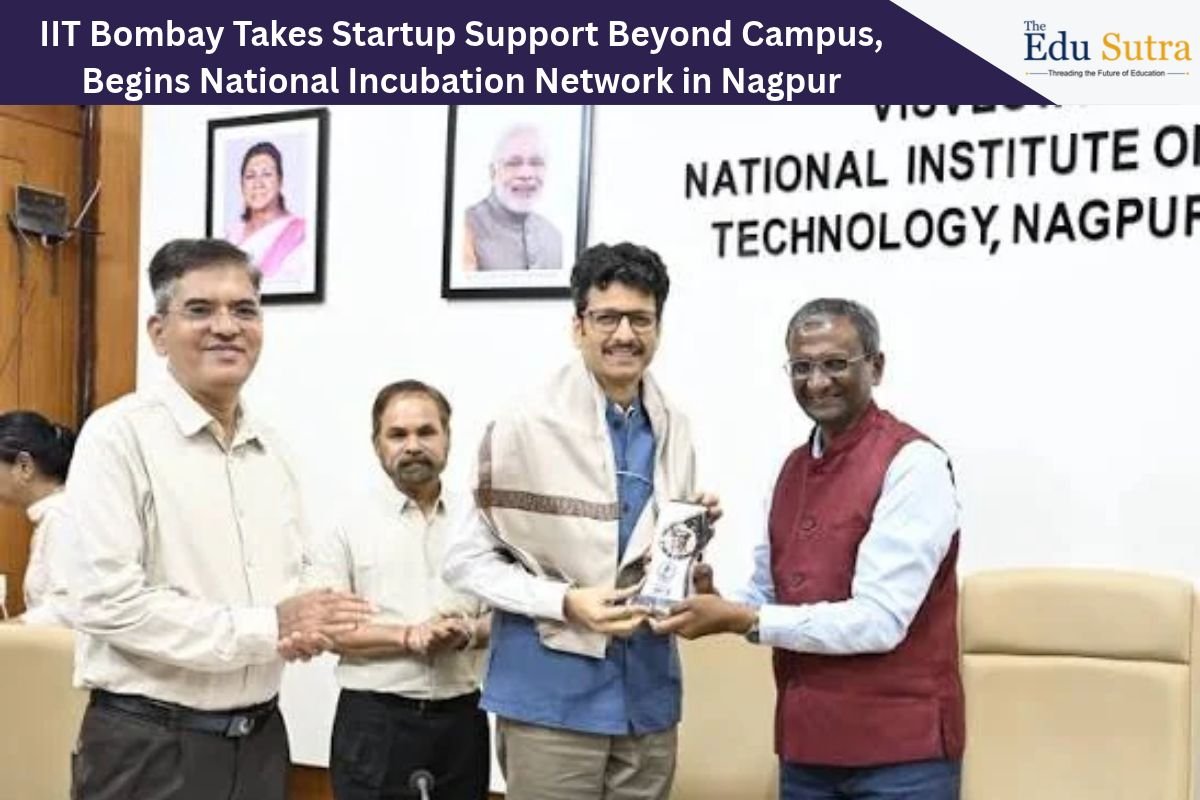
Nagpur offers a starting point for the model, with the incubation foundation at Visvesvaraya National Institute of Technology among the initial institutional partners. IIT Bombay said a stakeholder engagement in Nagpur on October 12 helped lay the groundwork for the initiative.
The announcement signals an effort to widen access to startup support, but the impact will depend on how effectively regional partnerships are built and how many ventures eventually secure mentoring, funding or customers. The institute has not presented the initiative as a guarantee of investment or commercial success for participating startups.
For higher education institutions outside established startup centres, the larger opportunity is to make entrepreneurship support a regular part of campus research rather than an exception available only to a few well-connected teams.