
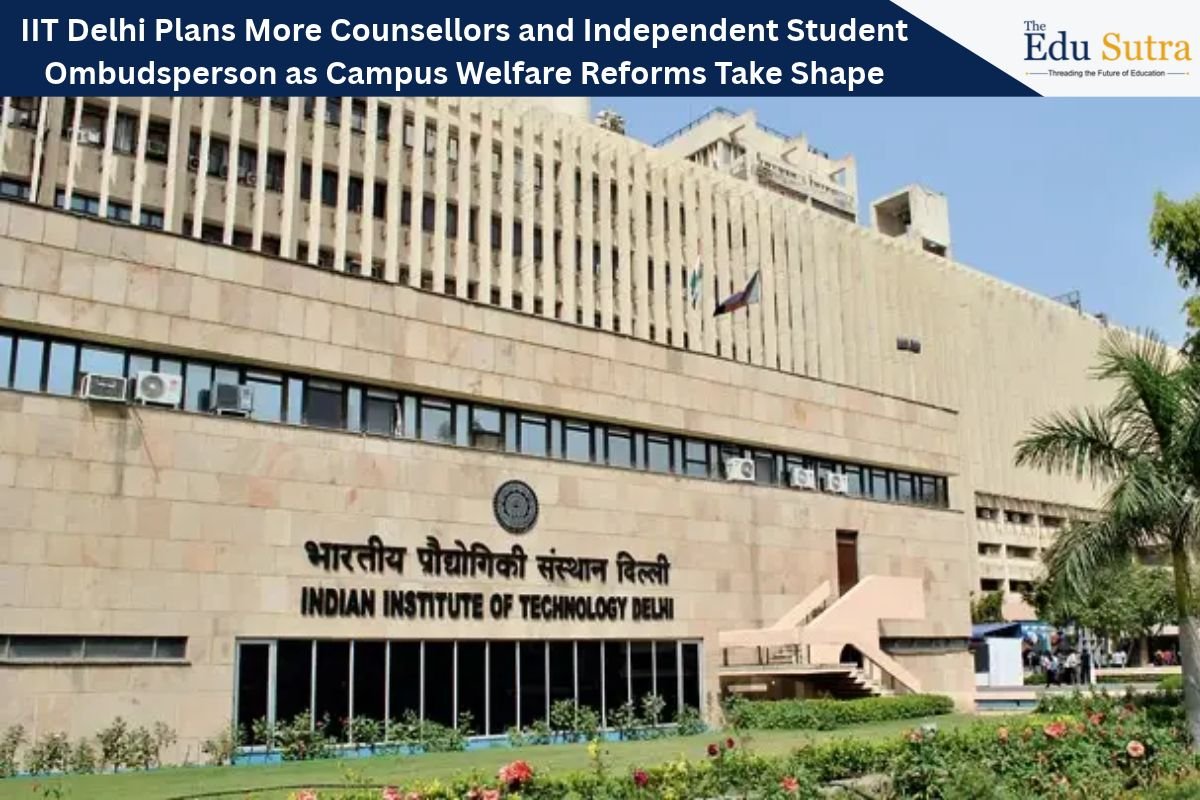
The Indian Institute of Technology Delhi has outlined a series of changes to its student welfare framework, including plans to appoint additional clinical psychologists and counsellors, engage visiting psychiatrists and establish an independent Student Grievance Ombudsperson. The measures, made public in a statement on November 4 and reported widely on November 5, follow recommendations of an external inquiry committee constituted after the death of student Rishikesh Kumar in August. The institute says the emphasis is on improving systems of support, response and accountability.
What the institute is proposing
The proposed expansion of professional mental health services is intended to make clinical support more accessible. Alongside additional full-time psychologists and counsellors, visiting psychiatrists would provide specialised assistance. The institute has also proposed a formal pathway for students resuming studies after an extended absence, bringing together counselling, academic coordination and peer or buddy networks. For students facing the pressures of coursework, isolation or a difficult return to campus, continuity of support can matter as much as the availability of a single appointment.
An independent channel for student grievances
The proposed Student Grievance Ombudsperson would provide a distinct route for students to raise concerns. The announcement does not yet establish how the office will be staffed, what powers it will exercise or when it will become operational. Those details will be important in determining whether students see the mechanism as accessible and independent. A grievance process can only build trust when students understand where to turn, how confidentiality will be handled and whether complaints receive timely responses.
External inquiry and student consultation
The external inquiry committee was headed by retired Delhi High Court judge Justice Mukta Gupta and included a senior AIIMS expert and two student representatives. IIT Delhi has said the committee submitted its report subject to confidentiality. Its recommendations were subsequently examined by an internal committee involving institute administrators and student representatives. The institute shared the recommendations and proposed steps with its community on October 31, and the plan was discussed at a Student Affairs Council meeting on November 3. Student feedback was incorporated into an implementation roadmap.
Also Read:- From IIT Bombay Laboratory to ₹62 Crore Revenue: India’s Homegrown Cancer Therapy Reaches Patients
Review of the wider support system
A further external review of IIT Delhi’s Mental Health Support System and Wellness Policy is planned, with two senior mental health experts, a welfare professional and two student representatives. It is expected to examine emergency responses, referral arrangements, monitoring and existing campus provisions. The institute has also proposed mandatory workshops on empathy, mental health and communication for faculty, administrative personnel and hostel staff. Such training is relevant because students often first disclose difficulties to people outside the counselling service.
What remains to be seen
The measures are proposals and initiatives being rolled out, not evidence that every promised change has already been completed. The institute has not publicly specified a completion date for all elements. Questions remain about the number of professionals to be recruited, waiting times for appointments, the independence and remit of the ombudsperson, and how the effectiveness of the changes will be assessed. Reporting these milestones will be essential to judging their impact.
EduSutra Perspective
The significance of IIT Delhi’s announcement extends beyond one institution. Academic excellence and student welfare should not be treated as competing priorities. The more meaningful test will be whether students can obtain help early, return to study with appropriate support and raise concerns without fear. Transparent implementation, sustained resources and genuine student participation will determine whether the proposed reforms translate into a safer and more responsive campus environment.