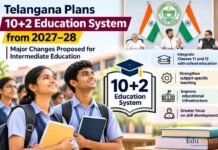
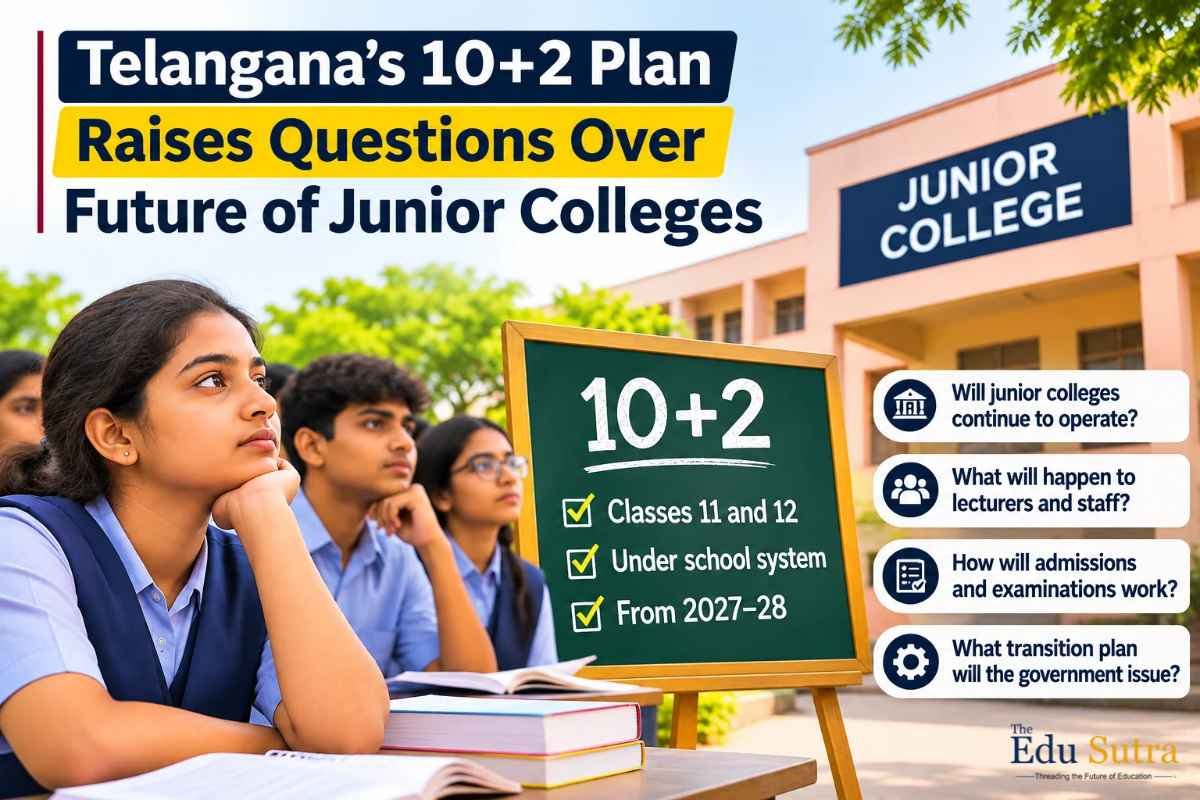
Telangana’s plan to integrate Intermediate education with the school system from the 2027–28 academic year has prompted a pressing question for students, parents and educators: what happens to the state’s existing government and private junior colleges?
Chief Minister A. Revanth Reddy directed education officials on November 11 to prepare for a 10+2 framework. The direction signals a major change in how Classes 11 and 12 may be administered, but a detailed implementation order setting out the status of junior colleges has not yet been established.
For families, the immediate concern is continuity. Students now completing Class 10 will need clarity on where they can enrol, which curriculum and examinations will apply, and whether existing colleges will continue to admit new batches during the transition.
Private junior college managements face a different set of questions. If higher secondary classes become part of the school system, will current colleges be allowed to continue under revised affiliations, be required to meet new infrastructure standards, or be offered another transition route? None of these outcomes should be treated as settled without a formal government notification.
Also Read:- Telangana Plans 10+2 Education System from 2027–28; Major Changes Proposed for Intermediate Education
Government junior colleges, too, may need administrative clarity on campuses, staffing, laboratories and student support. Any restructuring would have to account for institutions serving rural and lower-income communities, where access to nearby higher secondary education can be decisive.
The position of lecturers and non-teaching employees is equally significant. Service conditions, qualifications, recruitment arrangements and possible redeployment would require explicit rules rather than assumptions based on the proposed reform.
The future of the Intermediate Board has also become a subject of public debate. Comments attributed to government representatives have fuelled speculation about replacing existing structures, but the precise legal and examination arrangements must be confirmed through official orders.
A successful transition would depend on much more than renaming classes. It would require a credible timetable for curriculum alignment, examinations, school readiness, teacher deployment and student admissions, with clear communication to every affected institution.
For now, the government’s direction establishes an intended reform and target academic year. The fate of individual junior colleges, the status of employees and the examination system remain questions that deserve timely, detailed official answers.